Since 6 April 2026, statutory sick pay (SSP) has been payable from the first day of sickness. The waiting days have gone, the lower earnings limit has been removed and pay is now linked to earnings for lower-paid staff. If your payroll or sickness policy has not caught up, this guide shows what to check.
What changed in April 2026
- No more waiting days. SSP used to start on the fourth day of sickness. It is now payable from day one.
- More people qualify. The lower earnings limit has been removed, so part-time and lower-paid employees who previously got nothing are now entitled.
- An earnings-linked rate. SSP is now the lower of 80% of the employee’s average weekly earnings or the standard weekly rate.
What employers should check
- Payroll. Make sure your payroll software applies day-one SSP and the 80% calculation correctly.
- Eligibility. Check which employees were previously excluded because of low earnings. They may now qualify.
- Your sickness policy. Remove any reference to waiting days, and check how company sick pay interacts with SSP.
- Contracts and handbooks. Update any sick pay wording that repeats the old rules.
- Managers. Make sure they record every absence, however short, and hold a return-to-work conversation.
Managing short-term absence fairly
Day-one pay removes the financial reason some staff had for coming in unwell. That is good for health, but short-term absence may rise. Clear reporting rules, consistent records and supportive return-to-work conversations are the best way to spot patterns early and treat everyone the same.
Frequently asked questions
Can employees still self-certify?
Yes. Employees can self-certify for the first seven calendar days. After that, ask for a fit note.
Does this affect company sick pay?
Company sick pay is set by your contracts, but it must be at least as generous as SSP. Check your scheme still meets that.
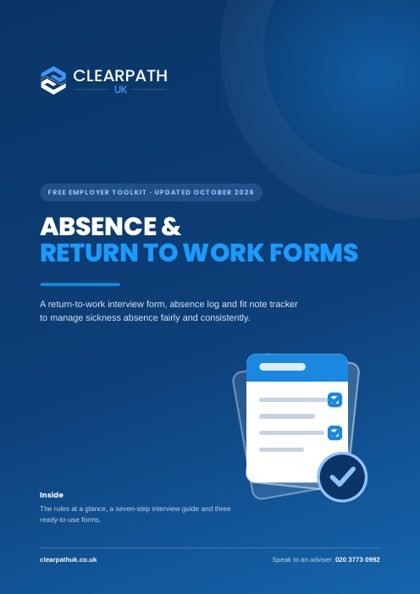
Need your policy and payroll checked? We review sickness policies, contracts and payroll settings for the new rules. Payroll services, absence support or download our free absence and return-to-work forms.
This article is general guidance and is not legal advice for your situation.