A short return-to-work conversation after every absence is one of the simplest and most effective ways to manage sickness. It shows you care, helps people back safely and makes sure absence is recorded consistently. Here is how to run one well.
Why return-to-work interviews matter
- Support. They are a chance to check the employee is fit to be back and whether they need any help.
- Early warning. Patterns of absence, or signs of a work-related or underlying health issue, show up sooner.
- Consistency. Recording every absence in the same way means you treat everyone fairly, which matters if absence ever leads to a formal process.
How to run the conversation
- Hold it promptly. Ideally on the employee’s first day back, in private.
- Welcome them back. Start by asking how they are. Keep the tone supportive, not accusatory.
- Confirm the details. Dates, reason for absence and whether it was reported properly. Check a fit note if the absence was more than seven calendar days.
- Ask about support. Is anything at work making things harder? Would a phased return, adjusted duties or an occupational health referral help?
- Consider disability. If the absence may be linked to a disability, think about reasonable adjustments and take advice before applying absence triggers.
- Review the record. Check absence levels over the last 12 months and explain your policy if a trigger point has been reached.
- Write it up. Record what was discussed and agreed, and ask the employee to sign.
Common mistakes to avoid
- Skipping short absences, so records are incomplete
- Asking for more medical detail than you need
- Treating absences linked to pregnancy or disability the same as other absence
- Applying trigger points inconsistently between staff
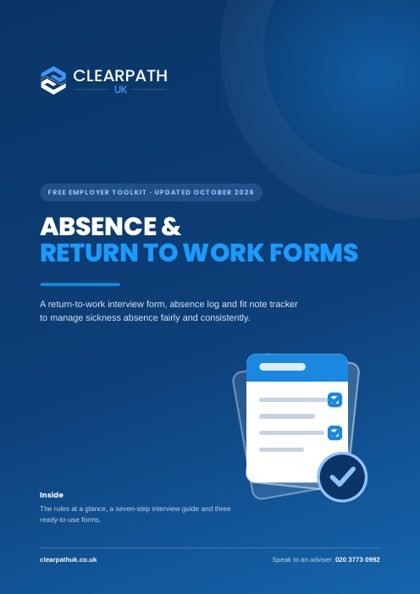
Free return-to-work form. Download our absence and return-to-work forms, including an interview form, absence log and fit note tracker. For complex or long-term cases, see our long-term sickness support.
This article is general guidance and is not legal advice for your situation.